Funeral homes are a big business in the United States. A huge business, in fact. Service Corp International (SCI) is the leading corporation in the industry, owing nearly 2,000 funeral homes and closing in on 1,000 cemeteries across the country. Nearly all large cities (and a good number of the smallest ones) in the country have at least one SCI-run operation serving families who have lost a loved one. To better understand the expenses behind these services, read How Much Does A Funeral Cost.

But, while so many other American industries are quickly on track to monopolize the world, the funeral home and cemetery industry seems to be going the opposite route. The current trend in corporate decision making seems to be that the most fertile business battle ground for the death care industry’s future is the United States and Canada – not the rest of the world. Large North American companies like SCI, and its closest competitors, Alderwoods Group and Stewart Enterprises, have recently backed out of many of their oversees operations and have returned to focusing almost exclusively on their North American properties.
Outside of the United States and Canada, funeral homes across the world seem poised to remain local – or at least regional – operations. Whereas places as diverse as England, Brazil, Germany, and even Saudi Arabia have proven fairly quick to adopt North American trends in other industries – from entertainment to clothing to fast food – it seems funeral homes across the world are content to abide by age-old customs.
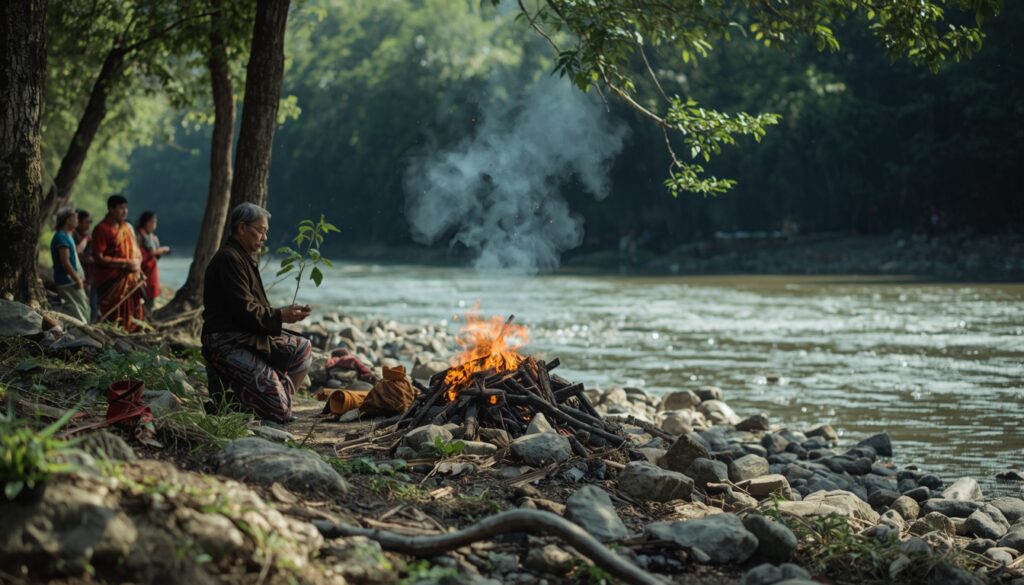
And, in a great many parts of the world, a “funeral home” is still a family’s actual home. As was often the case in North America even until the mid 20th century, it’s still a strong tradition, even in modern, industrialized countries, for families to lovingly prepare a deceased family member’s body right on a kitchen table without the hiring of “experts.” Cultural traditions, it seems, are trumping the modern need for convenience outside the United States and Canada – at least when it comes to funeral homes across the world. In Asian countries, for example, public cremation via funeral pyre is still a strong tradition that simply is not befitting an international corporation. And, for Jewish and Muslim cultures alike, the tradition of burial requires an attention to detail that many families simply refuse to trust to strangers – especially those who work for large corporations guided by a profit motive.

Some critics of modern American culture will, of course, argue that this is a sign that the world is rejecting the fast-paced, impersonal life that large corporations stand accused of promoting. But that is a discussion best left to social scientists. It is still far too soon for the layman to judge whether this trend is indicative of global attitudes – or even more than temporary. It very well could be that the large North American companies are simply in a “re-grouping,” taking a break from world-wide expansion so they can study international trends and adjust their over-seas offerings accordingly in future years. And it’s also possible that, say, large companies in, say, China, Germany or even Saudi Arabia are in a quiet, global mood themselves. Could it be that companies specializing in organizing public pyres in, say, India or even Taiwan, may be planning to expand into North America themselves – offering their fare on a large scale basis to families seeking a change from the “traditional” funerals arranged by SCI and Alderwoods? Only time will tell, of course. <!– @page { margin: 0.79in } P { margin-bottom: 0.08in } A:link { so-language: zxx } –>