
Since about the time of the United States Civil War, the profession of funeral director has been as respected (and many will say as lucrative) as any other, from lawyer to doctor to financial accountant. And, as every reasonable member of those other professions realizes and acknowledges, such respect carries with it a great deal of professional responsibility. Ethics is a chief concern in just about any professional academy, whether the subject be journalism, business administration or any discipline in between. And it is no different in the case of mortuary science, the main scholarship area of the funeral director trade. Most mortuary schools today require their graduates to complete at least one course in general business ethics and then another that relates, specifically, to their profession.
The trouble with ethics, sometimes, is that, unless the general public that is being served by a particular profession is thoroughly familiar with the ethical causes and issues that relate to that trade, enforcing ethical principals can be a tricky affair. In many cases, those who would purposely sidestep their industry’s ethical practices, have nefarious intentions in mind, and to be confronted by an informed consumer constituency would spell doom for their dubious plans. So, they depend upon a general ignorance of what makes for healthy ethical practices, and they delight in a spirit of apathy among those they serve so poorly with their neglect of their ethical responsibilities.
The funeral home industry has had particular trouble in this regard, having come against much criticism in the middle of the 20th century for practices that many journalists, government officials and consumers alike believed were not in keeping with ethical decency. Those critics fought valiantly to turn their concerns into federal law, and, today, funeral homes and others in the “death care” industry find themselves singled out with laws that specifically prescribe their ethical dealings. In other industries, the participants themselves are left to police themselves in regard to most ethics questions.
But despite the legal protections that families and friends of those who have died are now afforded under federal laws, it is still widely acknowledged by those who observe the funeral home industry closely that matters of ethics are still given short swift in many funeral home business practices – the letter, but not the spirit, of the law is what is most closely regarded.
So, with that state of the memorial products and death care industry in mind, we offer this run down of what consumers should know – for enforcement purposes – about how ethical funeral directors are expected to behave and operate. It is important to note that our discussion does not involve legally mandated ethical responsibilities, but, rather, rules that the funeral home industry’s leaders have developed themselves. All that is discussed below is a summary of the National Funeral Director’s Association’s very own code of ethics that it expects – and even requires – all members to follow very carefully.
Funeral Director’s Ethical Duties to a Family
The National Funeral Director’s Association says the following about a funeral director’s ethical responsibilities to the families that come to them for help with funeral arrangements. “Members have an ethical obligation to serve each family in a professional and caring manner, being respectful of their wishes and confidences, being honest and fair in all dealings with them, and being considerate of those of lesser means.” The group then names several specific areas in which this portion of their code of ethics applies specifically. Funeral directors should not break any applicable laws related to their profession, but follow the Federal Trade Commission’s rules related to funeral directors, must relinquish a body without charge to a legally appointed family member who may request it, may not discriminate according to race, religion, sexual orientation, disability or national origin, and may not sell or rent previously used funeral-related merchandise to families without expressly explaining to the customer that the merchandise was previously used.
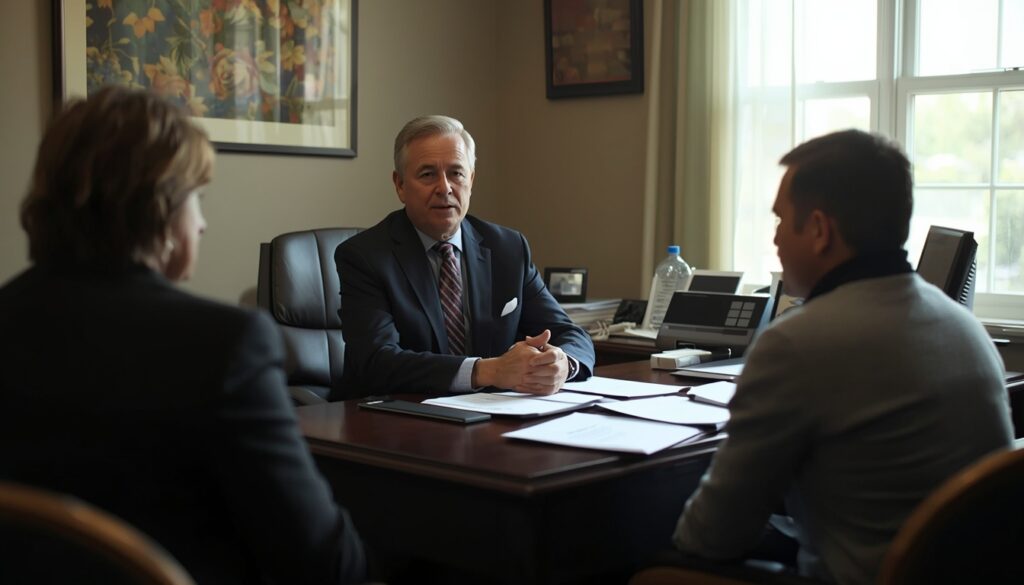
Further, ethical funeral directors must maintain privacy of the deceased and their family members, shall account for and return to the family any money or valuables they happen to come into possession of along with a body, and, must refrain from defrauding their customers and, finally, maintain a professional and respectful outlook while serving the deceased’s family members.
Most of these requirements are covered under federal, state and local laws, and many would likely be considered common sense by those who expect business owners in any field to be honest and fair. Nevertheless, the funeral director association ads them to their ethical code as a means to protect its members, and the public in general, from practitioners who might enter the field with intentions that are nefarious or, in general, just self-serving.
Funeral Director’s Ethical Duties to a Body
Next, the National Funeral Directors Association says this in regard to a funeral director’s ethical commitment to the bodies he or she contracts to care for. (The group uses the professional term “descendant” in place of body. “Members have an ethical obligation to care for each deceased person with the highest respect and dignity, and to transport, prepare and shelter the remains in a professional, caring and conscientious manner.”

Specifically, ethical funeral directors may not allow anyone not approved by a family or by the funeral home management to attend to a body; likewise, they must assure that only qualified personnel attend to the various duties related to preparing for a funeral – body transport, embalming, etc ; they must be certain that a descendant’s remains are treated with respect and dignity and properly covered at all time; they must be aware of, and follow, all laws related to the handling of a deceased body, and they must assure that all parts of a descendant’s body are disposed of in the same way (in other words, if a body is to be cremated, the funeral director may not remove, say, an organ for disposal in some other manner).
Funeral Director’s Ethical Duties to The Public
The National Funeral Director’s Association then moves on to discuss the funeral director’s ethical responsibilities to the general public: “Members have an ethical obligation to the public to offer their services and to operate their businesses in accordance with the highest principles of honesty, fair dealing and professionalism.” This section of the code of ethics requires that funeral director’s refrain from directly soliciting customers for their funeral arrangement services. It also requires that advertising not be misleading or false in any way. Further, it requires that funeral directors not use drugs or alcohol to such an extent that those practices interfere with their ability to provide dignified services to their clients, and it prohibits funeral directors from committing felonies or any crime involving immoral conduct. And, finally, the code prohibits funeral directors from paying for referrals from clergy members, doctors, nurses, hospitals, or anyone else who regularly comes across death.
As in all of the previous cases, this section of the code of ethics also is backed by federal, state and local law in many aspects, and this professional document helps assure consumers that, in general, all funeral directors are in support of those laws to the point of holding themselves to even higher standards than the law requires.

Funeral Director’s Ethical Duties to Government
Then the National Funeral Director’s Association turn its attention to funeral director’s ethical duties to government: “Members have an ethical obligation to maintain strict compliance with the letter and spirit of all governmental laws and regulations that impact the funeral consumer, the funeral profession, and the public health.” This section of the code of ethics requires funeral directors to comply with all state, local and federal laws related to their profession and to assure that all who work in their employ do so as well. This means, among other things, assuring that they and their employees maintain up-to-date licenses in good standing for all work they do in the profession. It also means that funeral directors must pay careful attention to following laws related to consumer protection and the environment. To better prepare financially and avoid unexpected expenses, read How Much Does A Funeral Cost? To areas of the law that, while not specifically mentioning death care or funeral directors in most cases, do, indeed, apply directly to the profession in many situations. The code specifically prohibits funeral directors from making false statements on a death certificate or on any government related paperwork they are required to submit.
Again, we see that funeral directors, as a whole, have taken a proactive step in assuring the public that they are committed to following all relevant laws in their trade by policing themselves, in a sense, with this industry-wide requirement that is the funeral director’s code of ethics.
Funeral Director’s Ethical Duties to Each Other
And, finally, the National Funeral Director’s Association lists the funeral directors’ ethical obligations to one another, specifically, as members of the association. “Members have an ethical obligation to promote, participate and support the National Funeral Directors Association in its mission to help all members enhance the quality of funeral service to families.” Specifically, this means that members of the group must maintain respectful participation with all other members of the group, must adhere to all association rules, and must cooperate fully and respectfully with any investigation the group’s leaders may conduct into possible violations of the code of ethics or any other association rule.
This portion of the code of ethics is intended to promote the association to all funeral directors as a community of responsible, committed business leaders who have the best practices of their group and their customers consistently in mind.
Funeral Director Ethical Ethics Enforcement
In a related document to the code of ethics, the National Funeral Director’s Association also publishes its guidelines for how violations of the code of ethics are to be investigated and how the code is to be enforced. The group has a well-considered procedure for hearing complaints against funeral directors accused of violating the code and then assuring that those funeral directors receive their legally due process before any sanctions are enforced. This procedure has been adopted and approved by the group’s board of directors and it is subject to changes as members and board members see fit – and these changes are, further, made according to another set of policies and procedures.
Sanctions for violating code of ethics – aside from any criminal or civil penalties that may be handed out separately to funeral directors by a state or federal court system – include both monetary penalties and even suspensions of membership in the group. All cases are considered carefully, from investigation to announcement of a fine, but one interesting thing to notice is that the association, being a private group, is not under the same ethical and legal obligations as court systems when it comes to making investigation findings and penalty decisions available to the public. Whereas a court in the United States is almost always required to be very open and transparent about information it collects and decisions it makes, the National Funeral Directors’ Association is very careful to say that its members may release only a very limited amount of information to the public about its decisions regarding ethics violation charges. In general, the group may only confirm that an investigation has been done and that sanctions have been applied. Reasons for the sanctions are, by the group’s very rules not to be made public. Under First Amendment laws of the United States, individuals involved in cases investigated by the National Funeral Directors Association’s own staff or representatives, are generally free to speak about their cases, but they may not speak on behalf of the group itself, nor are they ever required to speak about their cases – except, perhaps, by court order in, say, a subpena.
In general, anyone (whether it be a concerned member of the public, a fellow funeral director or a consumer of a funeral director or funeral home) may contact the group to request that an investigation into an ethical matter be conducted. But the group is under no legal obligation to follow up on that request. Most consumer advocates will suggest that, when complaining about a practice of a funeral director or funeral home, the best approach is to first discuss the matter with the funeral director himself. If the response is not satisfactory, then contacting the national association would be appropriate and, finally, if the association fails to act, then a visit with state or local government officials may be in order.